Our church community has been working towards being “green” since well before our Net Zero building project. Our Board of Christian Action had taken many steps toward becoming a “Green Church,” following guidelines of the Environmental Ministries of the United Church of Christ. We were already using recycled paper products, purchasing sustainably grown coffee, shifting landscape care to organic methods, composting when possible, and recycling materials.
When we began looking at how to take advantage of our south-facing roof, a Green Task Force formed. This team and our Board of Trustees wanted to set an example and show leadership in our efforts to address climate change and reduce our carbon footprint. Members of the congregation have long considered care for the environment as a core faith practice.
The first step toward becoming “green” was replacing every light bulb with LED bulbs to reduce our electric needs.
We needed to figure out how to upgrade the exterior and interior lighting, including cove lighting in the very high sanctuary ceiling (requiring several tiers of scaffolding). Some of the lighting fixtures and dimmers were no longer code compliant. We did not have motion-sensitive lighting in spaces that lent themselves to these items like restrooms, hallways, and basement. By retrofitting the items mentioned, we were able to model the cost savings in electrical use based on replacing every incandescent, inefficient bulb with LED bulbs and we were able to apply for incentives. The payback for the lighting alone was less than seven years and so our Trustees agreed to proceed.
The second step was installing a solar array and converting from oil burners to electric heat pumps.
Once the electric needs for lighting were reduced greatly, we looked to the heat in the building which consisted of two outdated oil furnaces, oversized and inefficient. We looked at converting the HVAC systems to electric heat pumps. When that was modeled, the size of a solar array able to be placed on the south-facing roof would furnish all the electric needs of the building! We were on our way to becoming a “Net Zero” building.
Our church’s Meetinghouse, built in 1800, is in a historic district where any change to the outside of a building must go through an approval process. Prior to our project, there had never been a request for solar panels submitted to the Historic District Commission which is always the first step before securing a building permit. Since the church building has very little land, there was no opportunity to install ground-mounted panels that wouldn’t be seen, so rooftop panels were our only choice.
The existing roof, asphalt shingles, needed replacing before solar panels could be installed. The challenge was to present materials for a new roof and unobtrusive solar panels that would be approved. The process took months and involved gathering information from the National Trust for Historic Preservation as well as State of Connecticut resources about solar panels in a historic district or on a historic building.
We were also able to model the cost savings of converting to electric heat pumps and eliminating the use of oil. Much of this was incentivized by our utility company. Including the incentives, the payback for this project was substantially less than 25 years. When we looked at the yearly costs of electricity, oil, maintenance of two oil burning furnaces, maintenance of a chimney, and the huge cost of emitting carbon, our finance committee found that the return on an investment in solar, plus the yearly ZREC Zero-Emission Renewable Energy Credits (ZREC) payments would be more beneficial than keeping funds in an investment account. We get one REC every time the sun produces one kilowatt-hour (kWh) of energy. Our yearly cost for electricity was budgeted at $6,000 and oil, $7,000 and now that expense is eliminated. We expect to receive close to $4,500 per year in ZRECs for the next 15 years.
The solar panels were installed and went live in March 2022. Until the heat pumps were operational and using electricity, any excess electricity generated by the new panels was “banked” to be used with a year.
The last step, an Electric Vehicle Charger
The last step of the project was installing a two-port Electric Vehicle charger, powered by our solar array. Our congregation paid for the installation (less
generous incentives.)
Our EV charger is the first one in the Town of Salisbury. With input and research done by our consultants, MHR Development, the Town has approved a regulation language change through the Planning and Zoning Department to accommodate for EV chargers throughout the Town.
By completing this project and becoming “green”, the Congregational Church of Salisbury is removing a whopping 87 TONS of carbon emissions each year. We’ve also been recognized as one of 16 National Runners Up in Interfaith Power and Light’s Cool Congregations Annual Award for Leadership and Sustainability.
We couldn’t have done it without you!
Our church engaged Mark Robbins and Rachel Fossom of MHR Development LLC, who provided great expertise and guidance in planning the project, engaging the most professional and reliable subcontractors, overseeing the components of the project to completion, and ensuring the highest incentives for our project. Many thanks to the years of dedicated services provided!
MHR Development, LLC – Clean Energy, Sustainability, Green Building
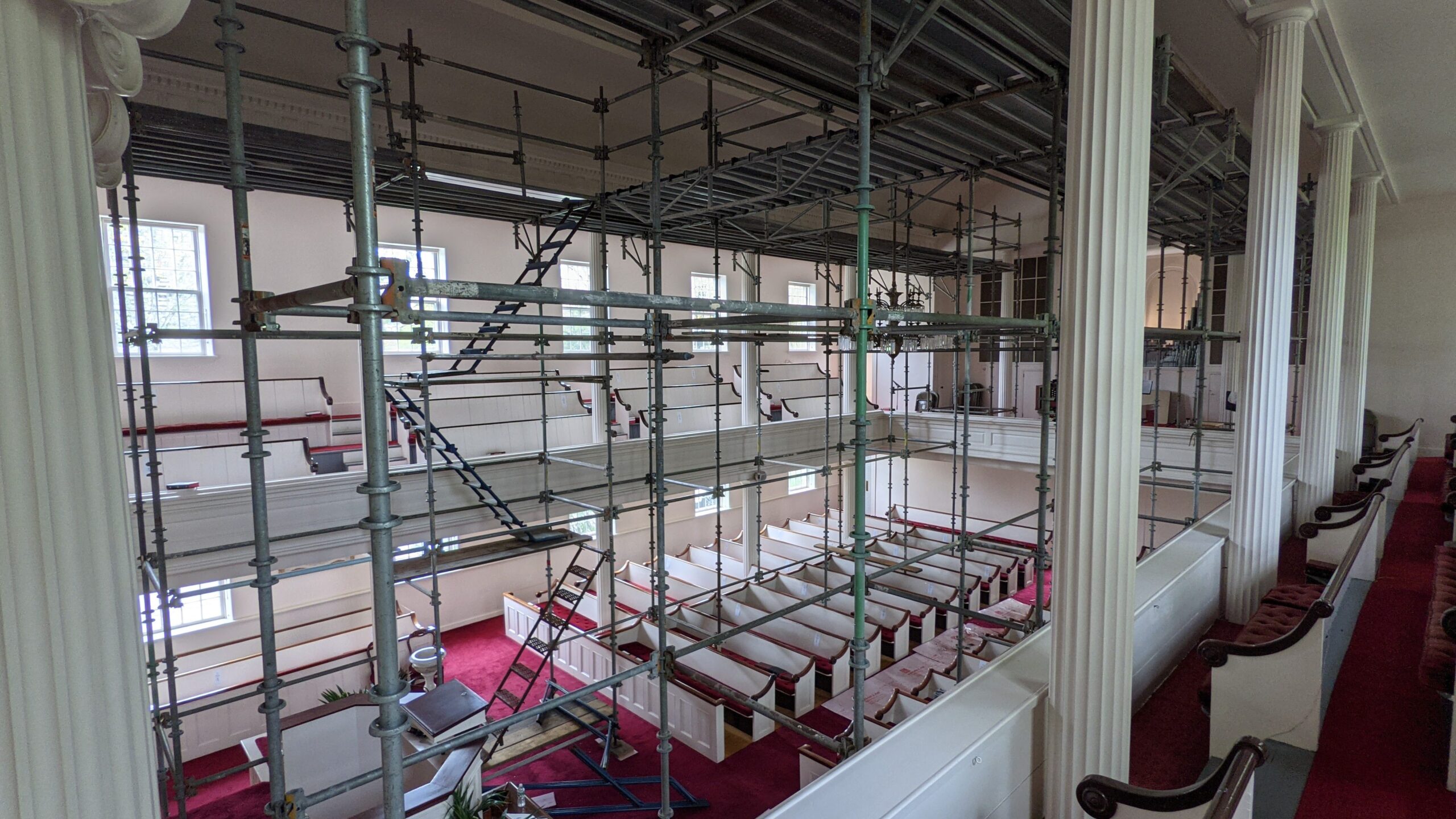
May, 2021: Replacement of cove lighting in the Meetinghouse requires filling the room with scaffolding for a week.
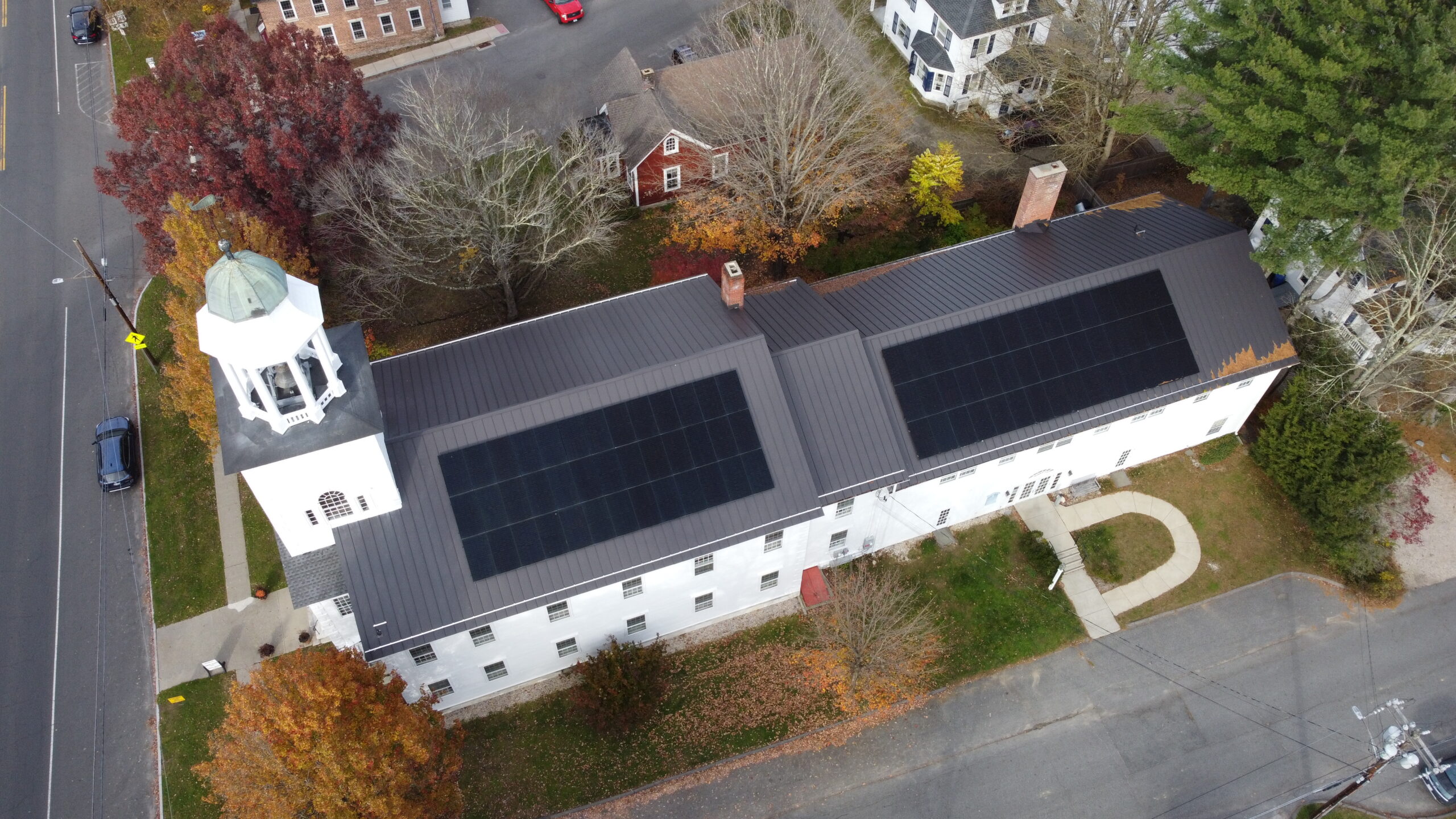
January — March, 2022: The solar panels are installed and connected to the electrical grid. The panels go “live,” generating power.
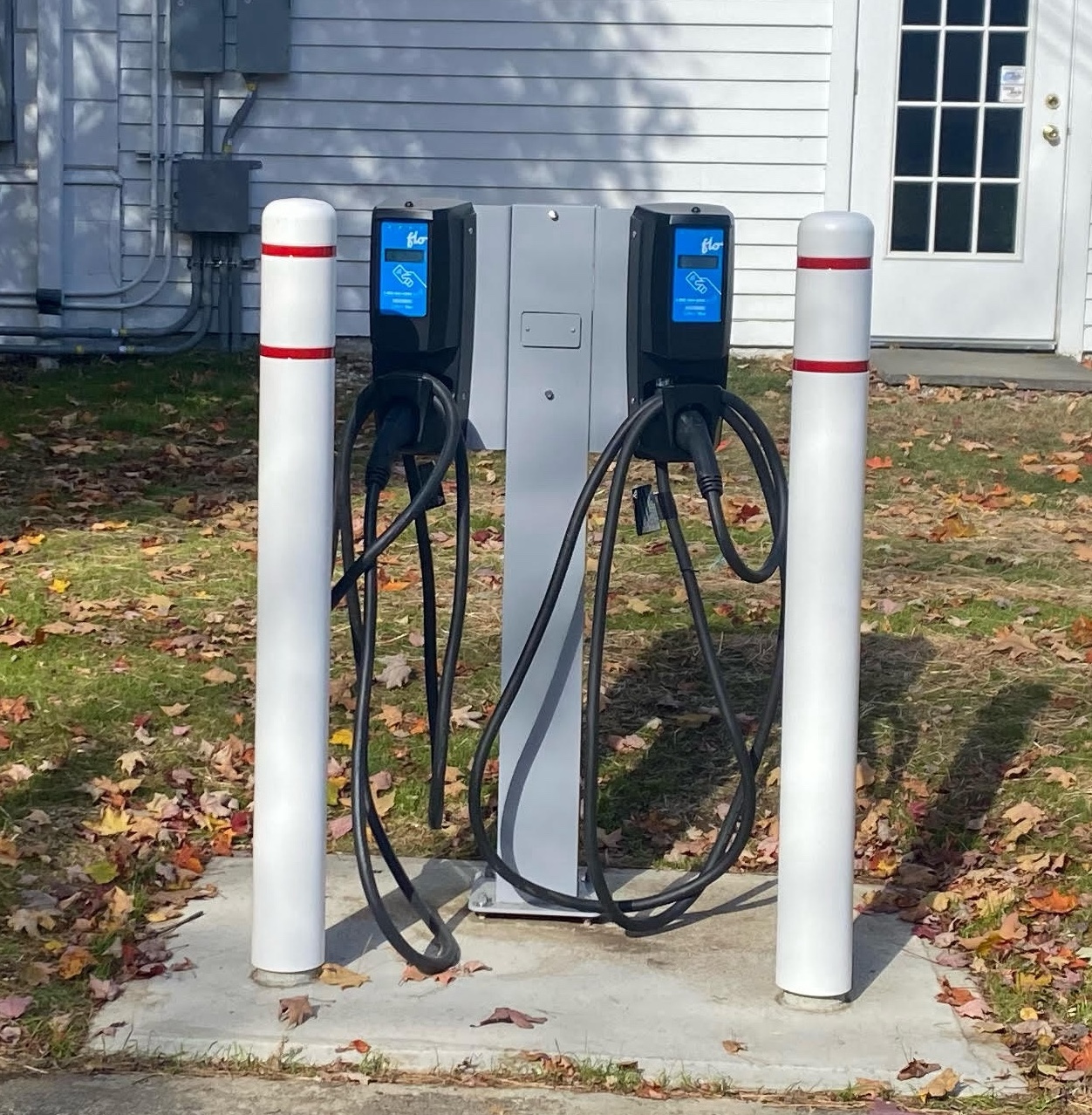
April, 2024: The electric vehicle charging (EVC) station is installed, connected, and available to the public.

 The Salisbury Housing Committee creates affordable rental housing; the Salisbury Housing Trust develops affordable housing for ownership. These two groups of volunteers lead our community in advocating on behalf of neighbors who would otherwise be unable to reside in Salisbury because of our skewed housing prices.
 Chore Service, Inc.
 Friends in Service to Humanity of Northwest Connecticut
 Greenwoods Counseling & Referrals, Inc.
 Hispaniola Health Partners
 Housatonic Youth Services Bureau